Life transitions
A move, a career change, a divorce, a new baby, a house that suddenly has fewer people in it. Sometimes the change was your idea and it still knocked you sideways.

A transition is a strange thing to ask for help with, because there is often nobody to blame and nothing to point at. Everyone around you is treating it as good news, or as old news, but you are feeling a lot more.
some of what brings people here:
A career change, job loss, or promotion that's bigger than you expected
Becoming a parent, or watching your kids grow up and leave
A breakup, divorce, or the end of a long relationship
Moving to a new city, or leaving one that used to feel like home
A diagnosis (yours or someone you love's) that changed how you see the future
Any season where the life you had doesn't fit anymore, and the next one hasn't taken shape yet
Early sessions are mostly about getting the full picture: what's changing, what led here, and what this transition is actually stirring up for you, which is often more than the transition itself. We'll talk through your history, too, since how you've handled change before tends to shape how you're experiencing it now. You don't need to know what you want on the other side of this yet. A lot of the early work is just making sense of where you are, before we start figuring out where you're headed.
The consultation: Twenty free minutes. You describe what has changed and how you're feeling, and we work out whether this is the right place and who fits. It ends in a recommendation, not an assignment.
The first sessions: Your therapist will get to know you and begin to understand the current pain points and what has brought you here.
After that: You work towards your goals alongside your therapist. You have a reliable, unjudging person to confide in.
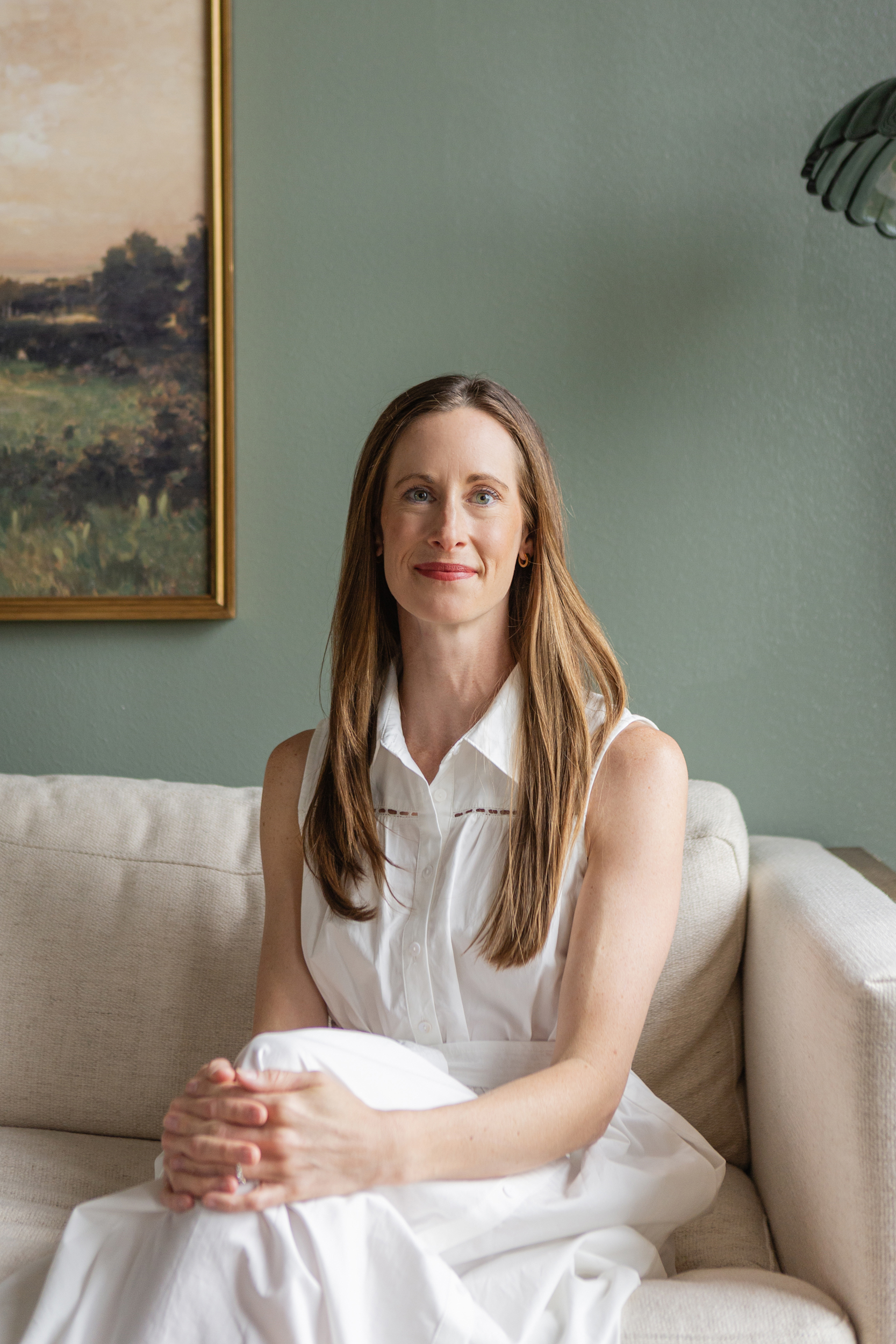
Ellen Johnson
MA, LPC | Clinical Director
Transitions bring up more than logistics. They bring up grief for what's ending, uncertainty about what's next, and sometimes a surprising amount of identity underneath it all. So the work moves between a few things: processing what you're leaving behind, even when it's a change you wanted; making sense of who you are when the role, relationship, or routine that used to define you is gone or shifting; and building the tools to make decisions from a steadier place instead of pure survival mode.
Some of it is practical: sorting through an actual decision, weighing options, getting unstuck from a loop of overthinking. A lot of it is slower than that: sitting with the parts of this that don't have a clear next step yet, and getting comfortable with not knowing before you rush to resolve it. Transitions rarely move in a straight line, and neither does the work. Some sessions you'll leave with clarity. Others, you'll leave with better questions.
Where this overlaps
A move takes a relationship with it. A new baby lands on two people differently. A divorce is a transition and a loss at the same time. Whichever door you come through, the work goes where it needs to.
If it has landed on the relationship: couples therapyWe draw from a mix of methods depending on what you need: ACT for building flexibility around uncertainty, IFS for understanding the different parts of you that this transition is stirring up, and practical, skills-based work for the decisions and logistics that come with real change. Nothing here is one-size-fits-all; the method follows what's actually going on for you.
If the change was work, or work is what broke: burnout and stress therapyNot sure which? Ask on a free consultationTransitions rarely show up alone. They tend to bring old patterns, old griefs, and old questions along with them. Our therapists work integratively, which means we're not limited to one lens when your situation doesn't fit one either. We've sat with people through career upheavals, breakups, becoming parents, losing parents, and every kind of "I don't know who I am right now" in between.
We won't rush you toward clarity you don't have yet, and we won't treat this like a problem to be solved quickly. Change takes the time it takes. What we can offer is steady, experienced support while you're in the middle of it, and someone in your corner who's seen this kind of hard before.
Yes. Nothing has to have gone wrong for a change to cost you something, and a transition you chose can be as disorienting as one you did not. The test is how much room it is taking up, not whether it would sound serious to somebody else.
That is a normal way to start. Working out what changed and what it cost is often the first piece of the work rather than a prerequisite for it.
They overlap more than people expect. Most transitions involve losing a version of your life even when the change was good, and that part often goes unnamed. You do not need to decide which one this is before you call.
Often less time than people expect, because there is usually something specific to work out. Nothing here is open-ended by default, and you are not committing to a number of sessions by booking a consultation.
Appointments Monday to Friday, 8am to 8pm, in person in Central Austin (across from Pease Park) or virtually across Texas. Weekends are sometimes available, so please ask if that works better for you.
No. The practice does not bill insurance directly. We can check your out-of-network benefits for you, by hand, before you commit to anything.
Say so on the consultation. Some of the team are working under supervision toward full licensure and see clients at a reduced fee, and it is a normal thing to ask about rather than an awkward one.
Twenty free minutes. You describe what changed and how it landed, we tell you honestly whether this is the right place, and you decide from there.
Book a free consultationPick a time that suits you, sometimes as early as today.
We talk through what would help.
You leave with a name, or somewhere else to look. Either way you are not back at the search bar.
%20(1).png)
