Burnout and stress
When work has quietly taken over, and you can't switch off, even when you're technically off, something has to give. The exhaustion isn't the problem. It's the warning sign.

Burnout doesn't always look like collapse. Sometimes it's quieter than that, and easier to explain away. It builds slowly, from carrying too much for too long, until it starts showing up in ways that don't feel like "burnout" at first.
Here's what it can actually look like:
Getting everything done and feeling nothing about it.
Snapping at people you love over small things.
Feeling like you have nothing left for the people who matter most.
Dreading things you used to enjoy.
Lying awake exhausted, but unable to actually sleep.
Wondering when you stopped feeling like yourself.
Nobody is going to tell you to quit your job or rearrange your whole life in the first session. That's not how this works.
We start by figuring out what's actually going on: not just "I'm stressed," but what's driving it, what it's costing you, and where your nervous system is stuck. A lot of burnout isn't just tiredness; it's a body that's been in overdrive for so long it's forgotten how to come back down. So early sessions often include real, practical work on nervous system regulation: learning what actually calms you versus what just numbs you, and building that back into your daily life.
From there, we start working on finding you again: the version of you that existed before everything got this loud. That might mean looking at boundaries, values, what you actually want your days to feel like, or patterns you've been running on for years without questioning. It's not about blowing up your life. It's about figuring out how to be in it without disappearing.
There is no waitlist to get started.
The consultation: A free, twenty-minute phone call. Tell us what you've been experiencing, and we'll recommend a therapist on the team who'd be a good fit for you.
The first sessions: History and orientation. How long this has been building, what has already been tried, and what you want to be different.
You'll have a clearer picture of what's actually driving your burnout, not just what it feels like from the inside. From there, we build a plan together, one that fits your actual life.
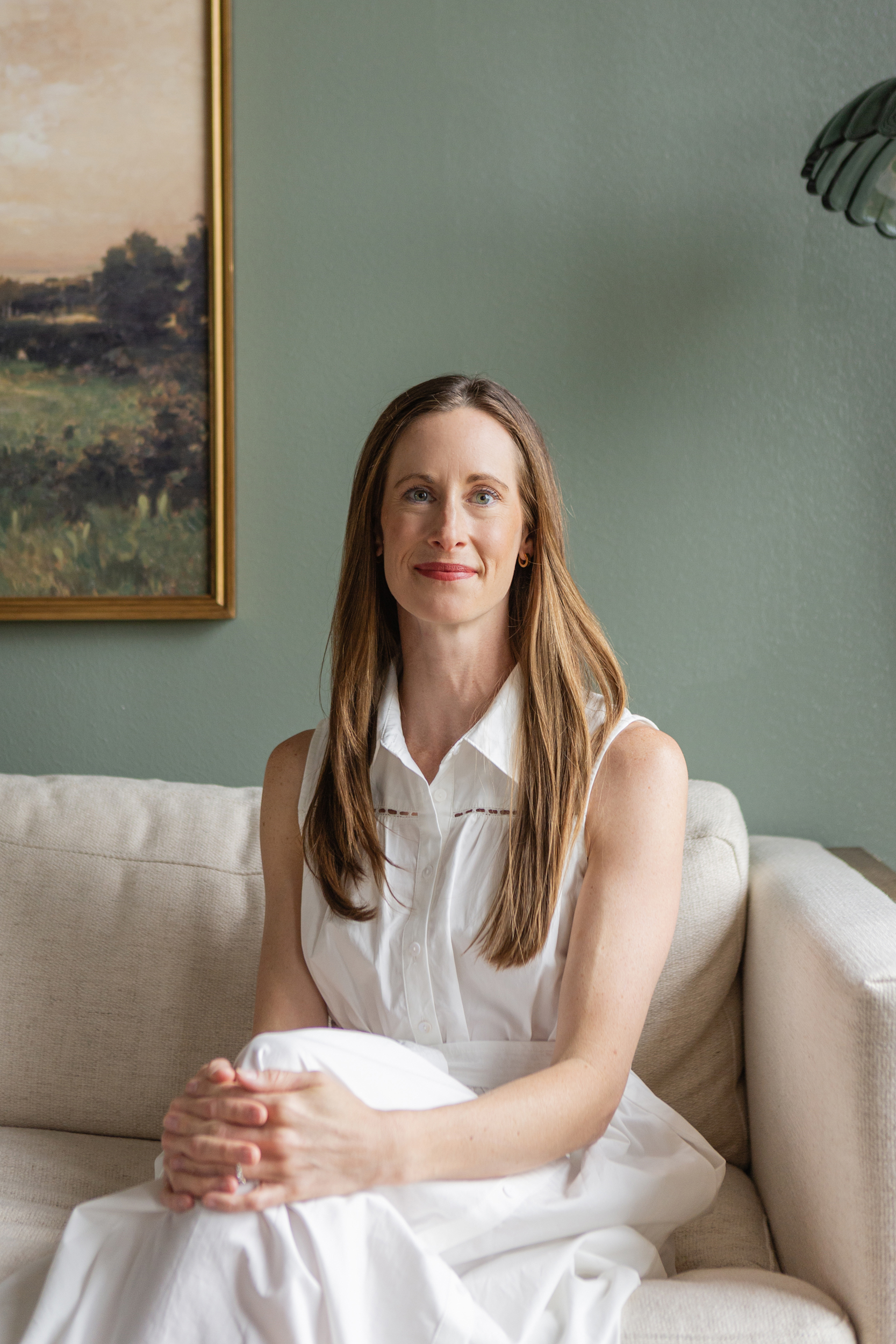
Ellen Johnson
MA, LPC | Clinical Director
This isn't a program with a set number of sessions or a checklist to get through. It moves at the pace of your actual life. Some weeks are about processing what's hard, other weeks are about practicing something new and seeing what happens when you try it.
Over time, that might look like naming the patterns that got you here (the overworking, the people-pleasing, the inability to say no) and figuring out where they came from. It might mean rebuilding a relationship with rest that doesn't feel like guilt. It might mean having harder conversations, at work or at home, that you've been avoiding because you didn't have the capacity for them before. And it means learning to notice the early signs of burnout creeping back in, so next time, it doesn't take a full shutdown to get your attention.
None of this is about becoming a different person. It's about becoming you again, with better boundaries, a nervous system that isn't stuck in overdrive, and a life that doesn't require you to run on empty just to keep up.
Where this overlaps
Burnout is often tangled up with anxiety, depression, relationship strain, or a body that's been running on stress hormones for so long it's started to affect your health. Sometimes it's sitting on top of old patterns: perfectionism, people-pleasing, a nervous system that learned a long time ago that rest wasn't safe or earned. And sometimes it's pointing to something bigger: a career that no longer fits, a relationship that needs real conversations, a life that's been on autopilot for years.
There's no single formula, but a few approaches show up often:
Polyvagal-informed work: helping your nervous system learn the difference between actually calm and just shut down, and building your capacity to move between states instead of getting stuck in overdrive or collapse
Boundaries work: not just the mechanics of saying no, but understanding what's made it hard to say no in the first place, and practicing it in ways that actually hold
DBT skills: practical tools for tolerating stress without numbing it, regulating emotions in the moment, and staying grounded in a life that isn't going to become perfectly calm overnight
We work with a lot of people who are exhausted, high-functioning, and running on fumes: the ones who look fine from the outside and are barely holding it together on the inside. If that's you, you're not alone here, and you're not broken. We're going to help you figure out what's actually driving your burnout, and what needs to change so it doesn't keep happening.
Our therapists blend nervous system work, practical skills, and real conversation. We meet you exactly where you are, whether that's barely functioning or functioning too well for your own good. And we won't pretend this is separate from the rest of your life. Your job, your relationships, your health, your sense of self. It's all connected, and we treat it that way.
You don't have to keep white-knuckling it. You just have to start somewhere, and we'll be right there with you.
Yes. It's not a formal diagnosis, but it's real, and it doesn't tend to resolve on its own by just pushing through. Therapy helps with the getting-through-the-week part and with the bigger question of what needs to change. You don't need a diagnosis to have a reason to come.
No. The work is about sorting out what you can change from what you've just been absorbing, so that whatever you decide is an actual decision, not a reaction.
As long as it's useful, and no longer. There's no set number of sessions, and nobody's trying to keep you in the chair. Most people come in with something specific, and the work stays aimed at that.
Appointments run early and late, and virtual sessions take the commute out of it. If your week is the problem, say so on the consultation and we will find the version that survives contact with your calendar.
Appointments Monday to Friday, 8am to 8pm, in person in Central Austin (across from Pease Park) or virtually across Texas. Weekends are sometimes available, so please ask if that works better for you.
No. The practice does not bill insurance directly. We can check your out-of-network benefits for you, by hand, before you commit to anything.
Say so on the consultation. Some of the team are working under supervision toward full licensure and see clients at a reduced fee, and it is a normal thing to ask about rather than an awkward one.
Twenty free minutes with someone who knows the team. You describe what you are experiencing, and we tell you if this is a good fit. Rates, insurance, and timing are all part of that conversation, not a surprise later.
Book a free consultationPick a time that suits you, sometimes as early as today.
We talk through what would help, and answer your questions.
You leave with a recommendation to work with someone on our team, or a referral to another resource in the area. Either way, you won't be back at square one.
%20(1).png)
