Faith and intimacy
For a lot of Christian couples, sex is the one topic no one really taught you how to talk about: not in church, not at home, and maybe not even with each other. Purity culture, shame, mismatched desire, past trauma, or just years of silence can leave intimacy feeling more like a source of tension than connection. We don't think that has to be the end of the story.

At Decades, we help individuals and couples explore intimacy in a way that honors their faith instead of working around it. You won't be asked to leave your beliefs at the door, and you won't be shamed for struggling with something so many people struggle with quietly. This is a space to be honest about desire, disconnection, grief, or whatever's gotten in the way, and to do the work of rebuilding (or building for the first time) intimacy with a therapist who understands both the clinical and spiritual sides of what you're carrying. You may resonate with…
You want intimacy to feel close and connected, but somewhere along the way, it started feeling like pressure, obligation, or distance instead.
You grew up hearing what not to do, but no one ever taught you how to build a healthy sex life.
One of you wants intimacy more than the other, and it's created tension neither of you knows how to talk about.
Past trauma, comparison, body image, or shame shows up in the bedroom, even though you've tried to leave it behind.
You've prayed about it, tried to talk about it, maybe even read the books, but nothing seems to actually change.
You want a therapist who won't flinch at the honest, specific details, and who won't ask you to choose between your faith and your body.
Your first session is mostly about listening: to your story, your history, and what's brought you in. We'll ask about your relationship, your background with faith, and how those two threads have shaped the way you experience intimacy. There's no pressure to have the "right" language or to know exactly what's wrong; we'll help you find the words as you go. From there, we'll build a plan together: one that moves at a pace that feels safe, and that treats your faith as part of the process, not something to work around.
The consultation: Twenty free minutes. Tell us what you are hoping to get out of counseling, only sharing what you are comfortable with.
Early on: learning about your history, how you got here, and where you want to be. Your therapist will help you feel comfortable as you start to share. We go at your pace.
After that: Once we understand what's really going on, sessions become more focused: working through the specific patterns, wounds, or disconnects that are getting in the way of intimacy.
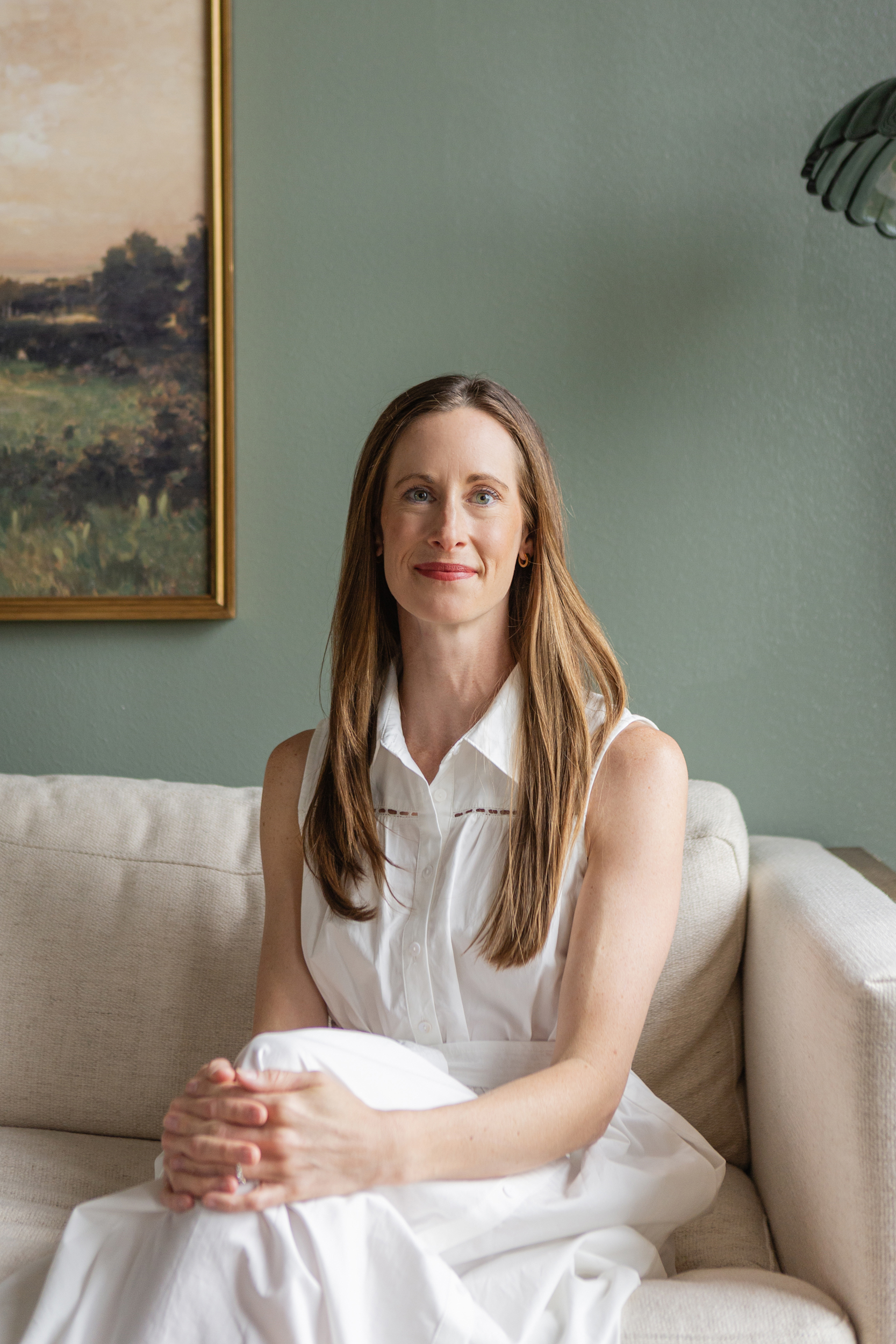
Ellen Johnson
MA, LPC | Clinical Director
Starting therapy for something this personal can feel intimidating, especially when faith and intimacy are tangled together in ways you've never said out loud before. You might not know where to start, or worry that what you're struggling with is "too much," too specific, or somehow off-limits to bring into a room with a therapist. It's not. Whatever you're carrying (confusion, shame, grief, mismatched desire, a history that still shapes how you show up now), there's language for it, and we've heard versions of it before.
You won't be handed a script or a checklist. This work moves at the pace you need, shaped by what's actually going on for you, not a generic program. Some people and couples move through things quickly once they finally have permission to talk about it; others need more time to build trust before the harder conversations happen. Either way, we will guide you through each step, and you'll never be pushed further than you're ready to go.
If your church sent you
Being referred by your church doesn't mean your pastor gets updates, and it doesn't mean this becomes something you have to explain to anyone. What you say here (including whether you came at all) stays between you and your therapist. This is a place to finally say the real thing, without wondering who else might hear it.
This is licensed clinical therapy that takes faith seriously, not pastoral counseling, and not a substitute for it. We're therapists who know how to hold space for both your faith and your intimacy concerns, and we're skilled at helping couples work through exactly this.
Interested in Premarital Counseling?Want to start broader? Counseling with a Christian lensNot sure which? Ask us on a callThere's no shortage of therapists in Austin. What's harder to find is one who won't flinch when faith and sex show up in the same sentence, who can hold the theology and the nervous system in the same conversation, without picking a side.
That's what we built Decades to do. Our clinicians are not guessing at what purity culture, shame, or a complicated church history might have left behind in the bedroom. You won't have to translate your experience for us, and you won't have to choose between getting better and staying who you are.
No. Faith isn't something we're trying to fix, minimize, or talk you out of. If shame, fear, or specific teachings have gotten tangled up with intimacy in ways that are causing you pain, we'll help you look at that honestly, but that's different from treating your faith itself as the diagnosis. You get to keep your beliefs and still do this work.
No. This page speaks to faith because so many people who struggle with intimacy have a Christian background shaping how they experience it, but you don't have to identify as Christian, or hold any particular belief, to work with us. If faith comes up, we'll follow your lead on how much space it takes in the room.
Yes. Plenty of this work starts with one person.
Some! If it matters to you to work with a therapist who shares your faith specifically, let us know when you reach out and we'll help match you accordingly.
Appointments Monday to Friday, 8am to 8pm, in person in Central Austin (across from Pease Park) or virtually across Texas. Weekends are sometimes available, so please ask if that works better for you.
No. We don't bill directly to insurance, but we can provide Superbills for you to send to your insurance company, or check your out-of-network benefits for you.
Let us know! We have a few therapists that see clients at a significantly reduced rate, and we'd be happy to discuss those options with you.
Twenty free minutes. We'll listen, we'll tell you honestly if this is the right fit, and you take it from there. No pressure either way.
Book a free consultationPick a time that suits you, sometimes as early as today.
We talk through what would help, and answer your questions.
You leave with a recommendation to work with someone on our team, or a referral to another resource in the area. Either way, you won't be back at square one.
%20(1).png)
