Body image and food anxiety
Food and body image aren't supposed to take up this much space in your head. Whether it's constant mental commentary, avoiding mirrors, or a quiet exhaustion no one else can see, that noise is worth paying attention to. This isn't about a meal plan or a list of rules. It's about understanding what's underneath it, and building a different relationship with food and your body.
Maybe you've told yourself it's not that serious. That other people have it worse. That you should be able to handle this on your own, or that naming it out loud would make it feel too real. So you keep managing around it instead of through it: quietly, on your own, hoping it eventually gets easier.
It's a hard thing to bring into a room with another person. But you don't need to have the "right" words for it, or be struggling in some extreme way to justify getting support. If food or your body have been taking up more space in your head than you'd like, that's reason enough to talk about it.
The hours spent planning around a meal.
You've gotten good at managing around it instead of looking at it
Feeling distressed if you miss a workout
Avoiding photographs, or studying them.
Days organized around whether you ate the way you meant to.
Part of you worries that if you let this go, you'll lose your grip on something.
We chose the name Decades for both halves: the years behind you, and the years still ahead. What you have been through is real. It does not get to write the rest of the story.
Nobody is going to ask you to change how you eat in the first session, or hand you a set of rules to follow. Early sessions are mostly about getting to know you and how this actually shows up in your life: when it's loudest, when it's quieter, and what it's been doing for you. We'll also talk about your history with it, because this rarely comes out of nowhere, and understanding where it started tends to make it less confusing and less shameful. Somewhere in there, we'll get a sense of whether therapy alone is the right level of support, or whether it would help to have a physician or dietitian in the picture too, not because something's wrong with you, but because this work goes better when your care is coordinated. Mostly, the early sessions are about building enough trust that you can be honest here, probably more honest than you've been able to be anywhere else about this.
The consultation. Twenty free minutes. You tell us what's going on, and we work out whether this is the right place, and who fits. You leave with a recommendation, not an assignment.
The first sessions. We'll get oriented: how long this has been taking up space, what it looks like in an ordinary week, what you've already tried, and what you'd want to be different. You don't have to arrive with the right words.
After that. We go at the pace the work can actually hold. If it would help to have a doctor or a dietitian in it with us, we'll say so. That would be a conversation, not a condition of staying.
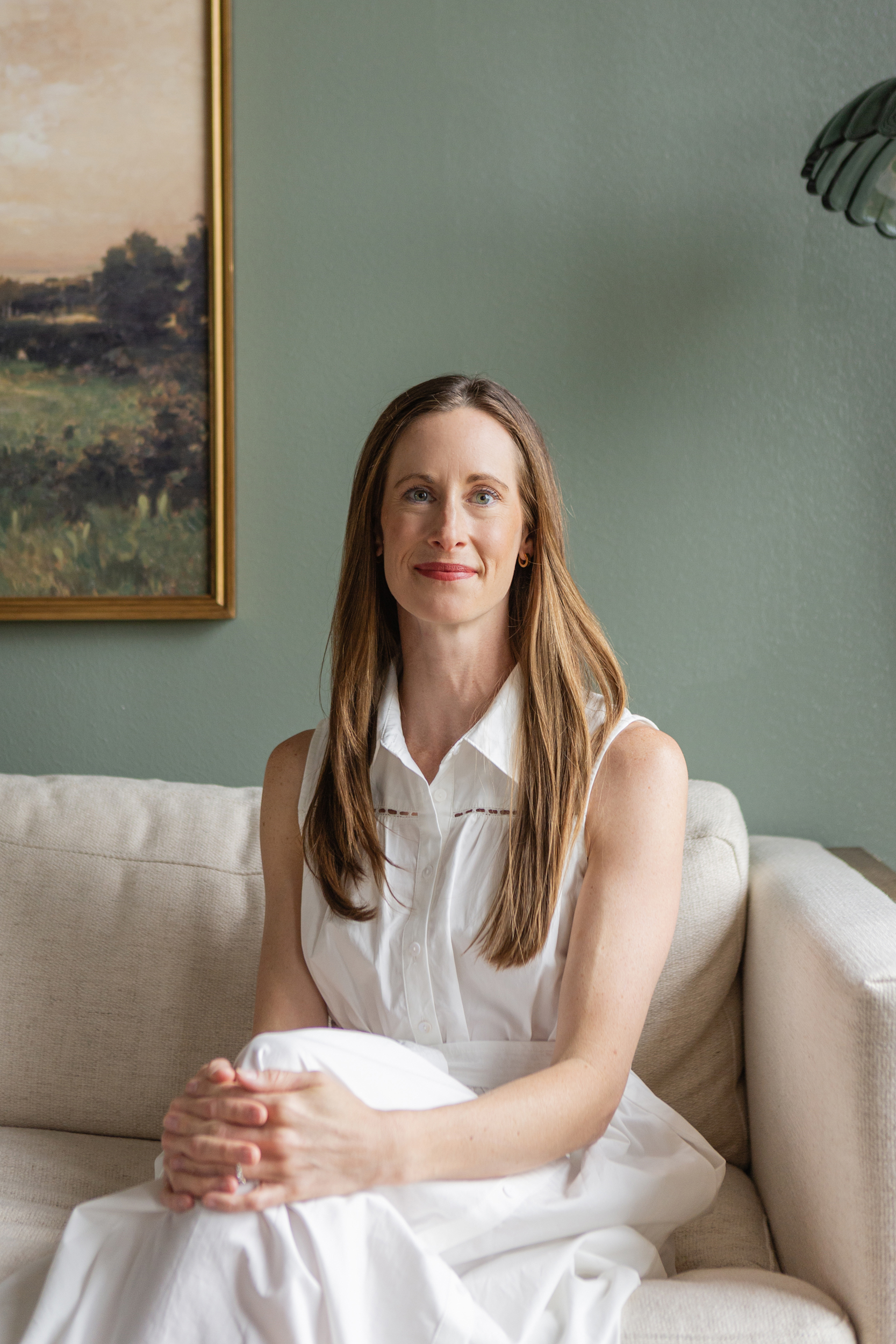
Ellen Johnson
MA, LPC | Clinical Director
The food is rarely the actual problem. It's the thing that's been asked to manage everything else, so that's where we spend our time. The anxiety it's been quieting. The sense of control it's been providing when other things felt uncontrollable. The way your worth got tangled up in it somewhere along the line. We look at where those beliefs came from (family, culture, a comment someone made a decade ago that never quite left) and what it would take to loosen their grip. Some of that is understanding. Some of it is practical work with your nervous system, because a body that's been braced for a long time doesn't unclench through insight alone. And a lot of it is slowly building a version of yourself whose worth isn't up for daily renegotiation. This is talking work, not meal planning. There's no food log to bring in and no numbers to report. If it would help to have a dietitian or physician in the picture, we'll talk about that together.
Our clinicians are trained to support clients working through body image concerns and food anxiety, which is different from specialized eating disorder treatment. If what you're carrying is further along than that, it matters more that you get to the right place than that you get to us. We'd rather have an honest conversation early and help you find the care that fits, whether that's here or somewhere else. If you're not sure which side of that line you're on, that's a fine reason to reach out and ask.
If a dietitian or physician is already part of your care, we're glad to coordinate with them, and if adding one would help, we'll talk about it together. This only happens with your consent, and you stay in control of what gets shared.
Sometimes what someone is carrying calls for more than weekly outpatient therapy. If that's where things are, we'll say so directly and help you find the right place, staying involved through the handoff so you're not starting over on your own. That isn't a door closing. You're welcome back when the time is right.
There's no judgment here about what you eat, how you look, or how long you've been carrying this quietly. You won't get a lecture, and you won't get platitudes about loving your body. That's usually not what people need, and it's rarely where the work actually starts.
What you will get is a therapist who's genuinely curious about what's underneath this and patient enough to go at your pace. We're honest about what we do and don't specialize in, and we'd rather help you find the right fit than keep you here because you walked through our door. Our clinicians work integratively, pulling from nervous system work, family systems, and practical skills, because this rarely has one clean cause.
Mostly, this is a place where you can say the parts you haven't said out loud. That tends to be where things start to shift.
No. Most people who come here don't have a diagnosis. You don't need one for this to be worth walking in. The question is how much room this is taking up in your mind and in your life.
We provide outpatient therapy for body image concerns and food anxiety. We are not an eating disorder treatment program and do not offer medical monitoring or meal support. If you need specialized or higher-level care, we'll help you find the right place. Not sure where you fall? Reach out and ask.
No. This is talking, emotional, and mental work. Where food itself needs its own person, that is a dietitian's job rather than ours, and it is something we can help you arrange.
No. We're happy to work with men, and with teens of either gender, when it makes sense. You don't have to decide that before you call.
Appointments Monday to Friday, 8am to 8pm, in person in Central Austin (across from Pease Park) or virtually across Texas. Weekends are sometimes available, so please ask if that works better for you.
No. The practice does not bill insurance directly. We can check your out-of-network benefits for you, by hand, before you commit to anything.
Say so on the consultation. Some of the team are working under supervision toward full licensure and see clients at a reduced fee, and there is no awkwardness in asking.
Twenty free minutes. You describe what's going on, and we tell you honestly whether this is the right place. If it's not, we'll say so and point you somewhere better.
Book a free consultationPick a time that suits you, sometimes as early as today.
We talk through what would help, and what it would take.
You leave with a recommendation to work with someone on our team, or a referral to another resource in the area. Either way, you won't be back at square one.
%20(1).png)
